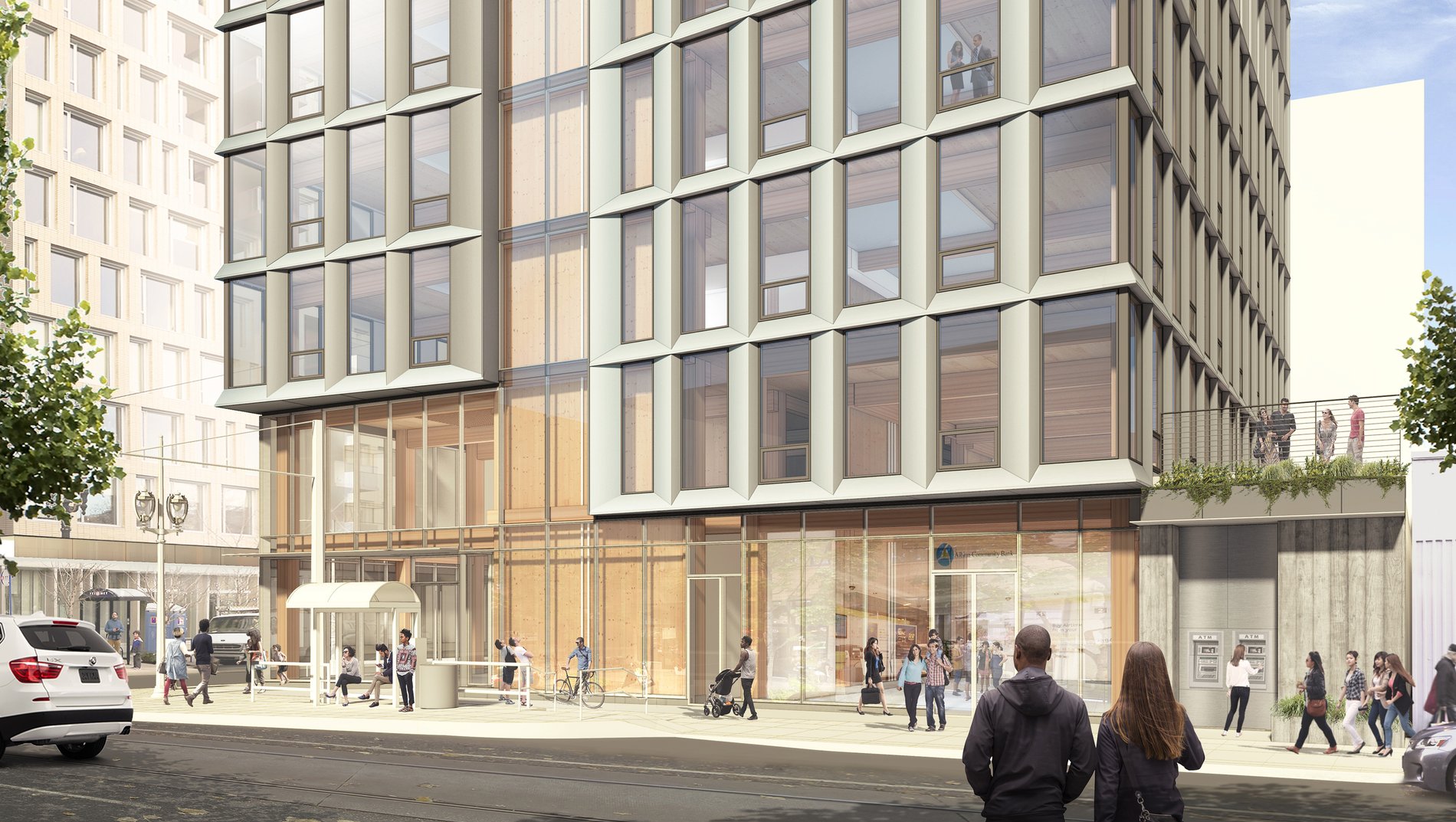
LEVER's design for Framework, the first wood high-rise approved for construction in the U.S., employs an innovative, first of its kind rocking wall core made from nine-ply Cross-Laminated Timber (CLT). The memory of the devastating 2010 and 2011 earthquakes in Christchurch, New Zealand was still very fresh and close to home for members of the Framework project team when we first won the competition to develop Framework. We set out to design it as a sustainable, resilient, damage-resistant building that could serve as demonstration of mass timber’s structural and aesthetic capabilities for for tall buildings in seismic zones.
Framework is designed to resist the seismic forces generated during a 2,500 year seismic event, with a building core capable of rocking and then re-centering itself with no damage to the primary structural system. Post-tensioned steel rods extending the entire length of each building core wall, as well as replaceable U-Shaped Flexural Plates (UFPs) at each floor level absorb the force of a seismic event. LEVER and our team of partners' all-wood solution for Framework was designed to integrate “
low-damage design” concepts, which reduce repair/replacement costs and downtime following a significant earthquake. The concept exceeds basic life-safety performance requirements by creating a resilient and easily repairable solution; avoiding the need to tear down the building following an earthquake.
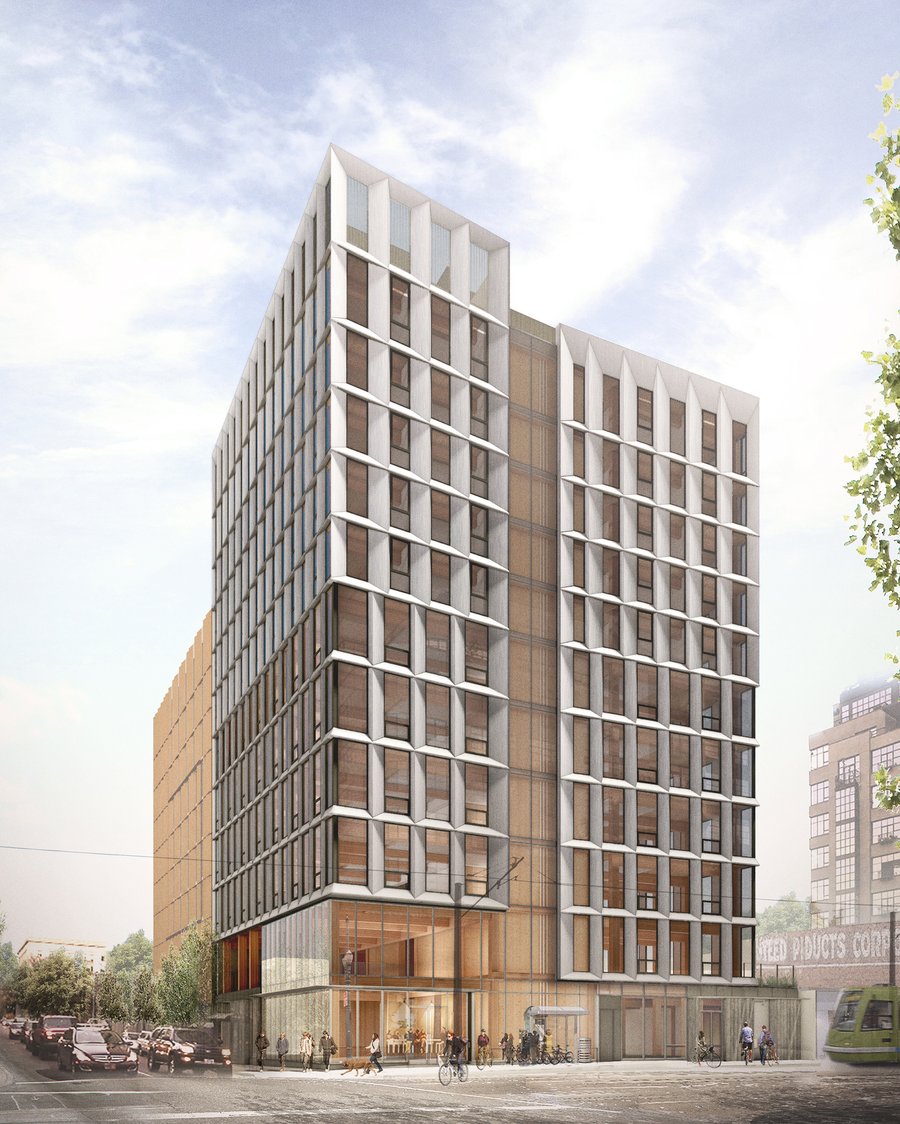
The Framework Building. Our team won a USDA and Softwood Lumber Board competition to develop this groundbreaking project, requiring extensive research and testing. Data from Framework is open-source - read more here.
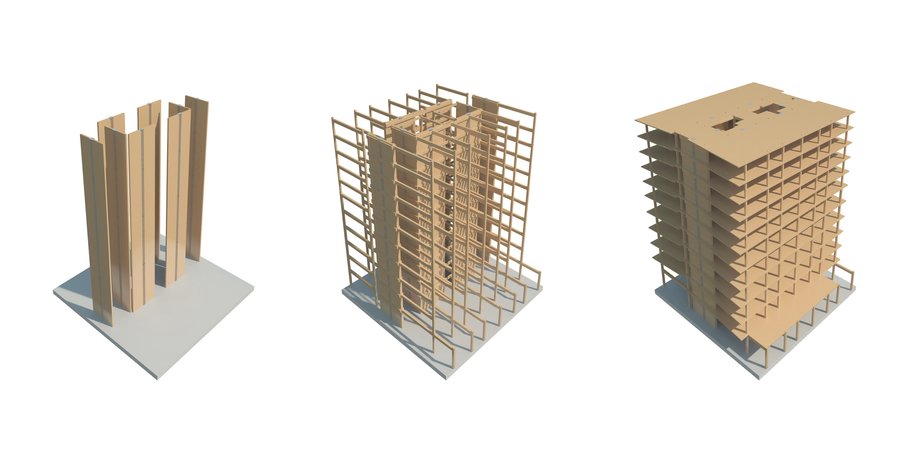
From left to right: Framework's 9-ply CLT rocking wall lateral system; glue-laminated timber column and beam gravity system; and mass timber superstructure with 5-ply CLT floor decks.
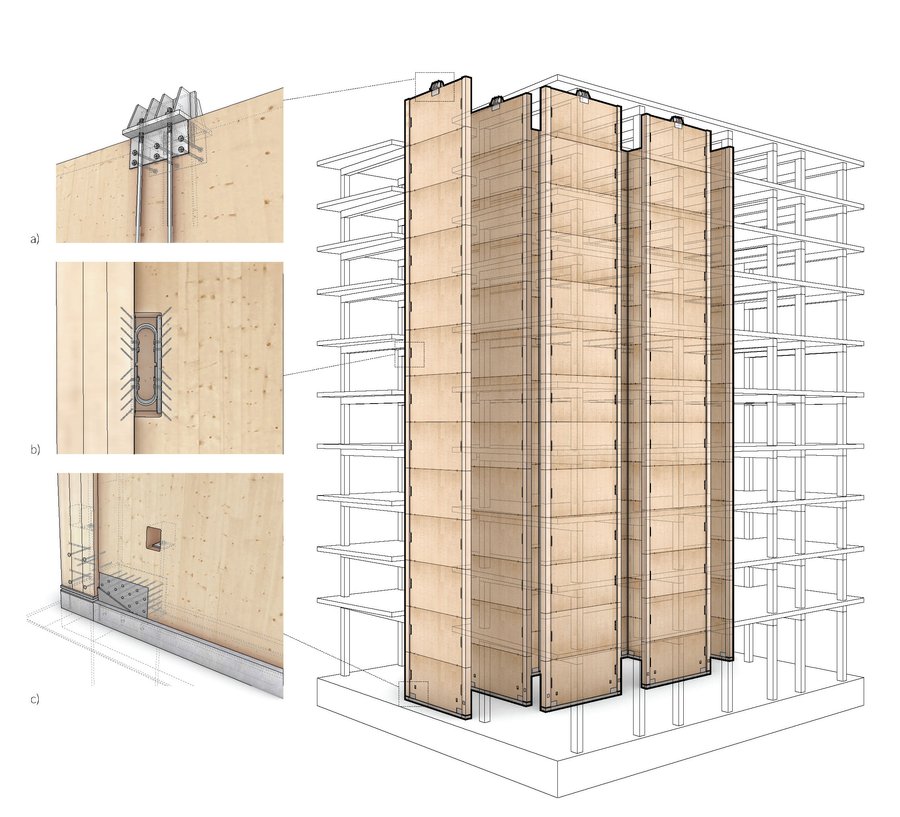
CLT walls, each comprised of thirteen 9-ply CLT panels measuring 10 ft x 20 ft, with deformation-controlled repairable / replaceable steel components.
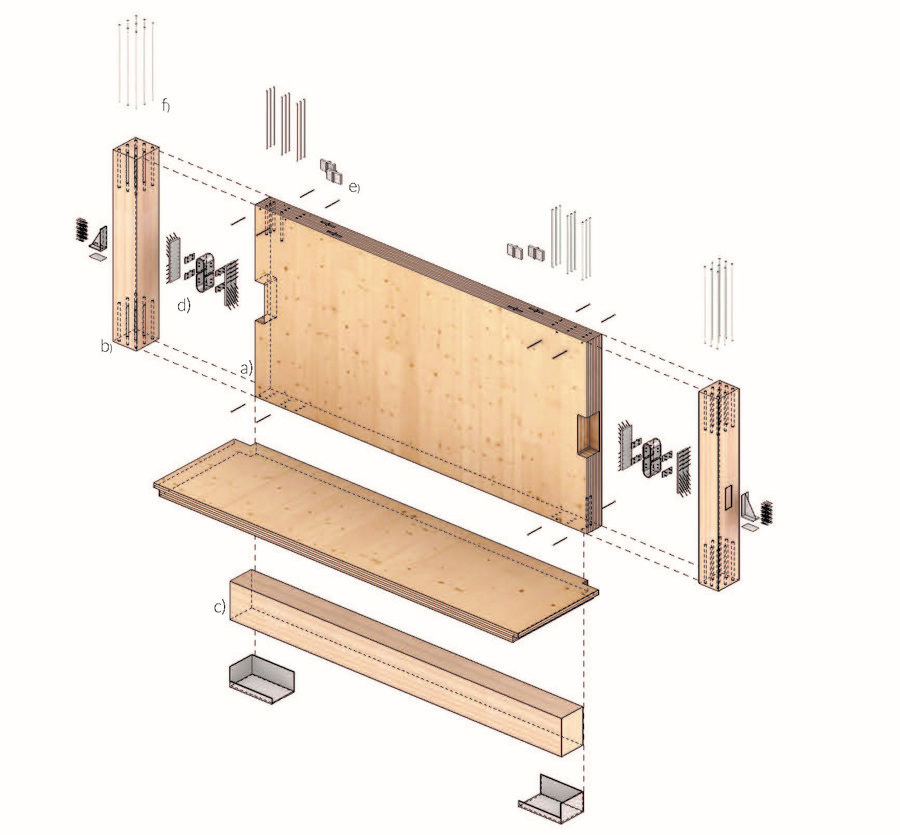
CLT wall and bounding beam assembly: (a) 10 ft. x 20 ft. 9-ply CLT rocking wall segment with associated (b) bounding columns, (c) collar beam, (d) UFP connectors, (e) splice key, and (f) epoxy rod reinforcement. Wall segments were engineered for offsite prefabrication and shipment to the jobsite for sequential assembly.
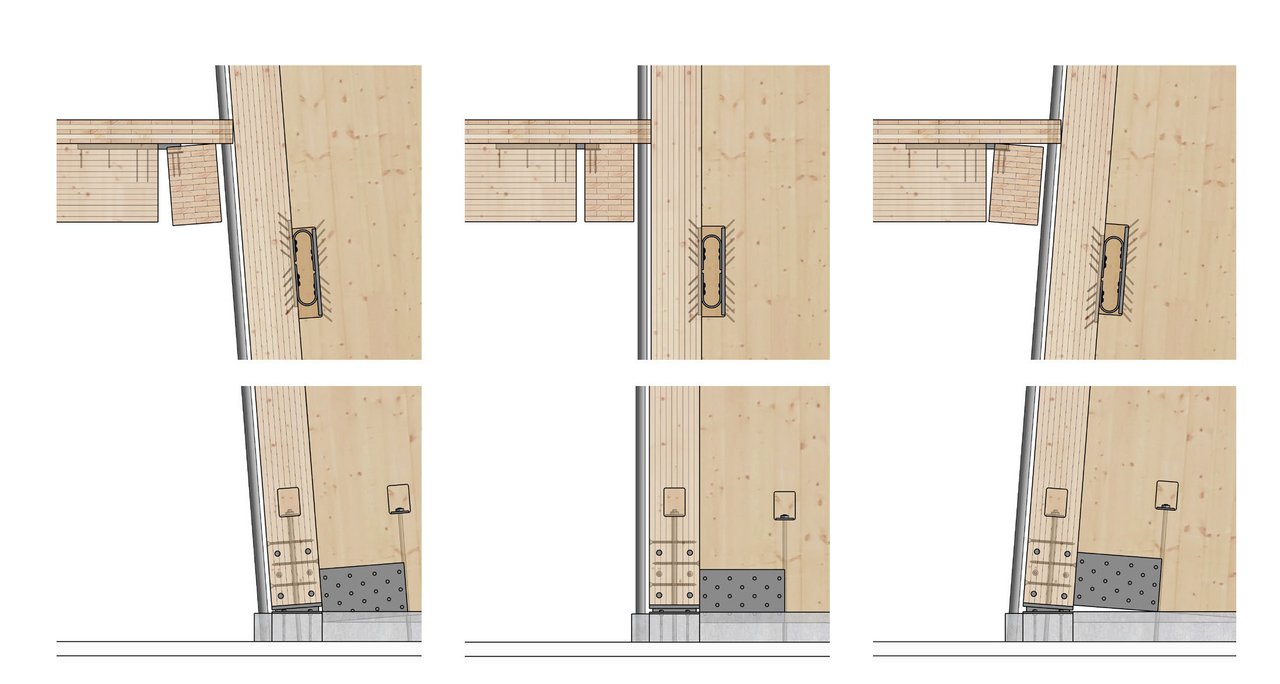
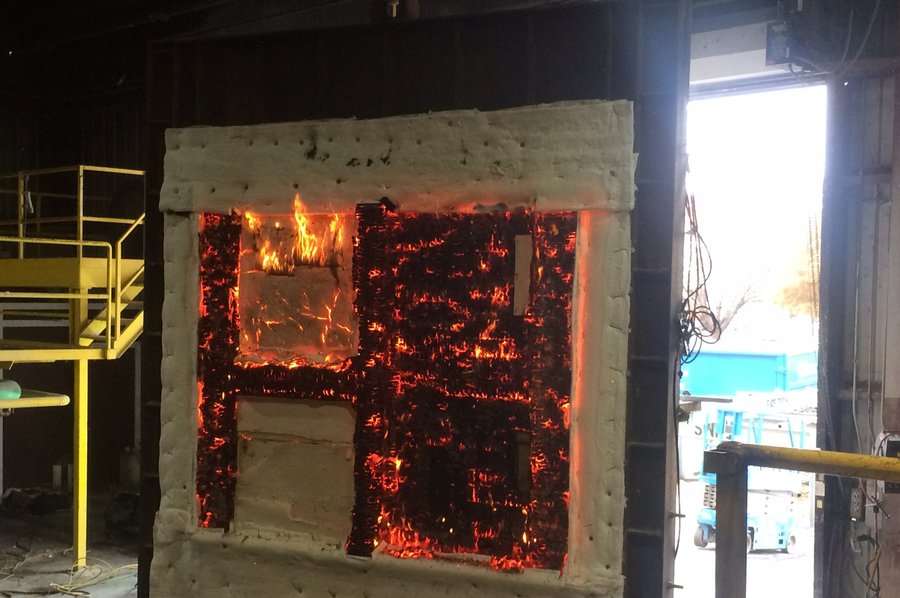
A successful ASTM-W119 2-hour wall, column, and UFP fire test
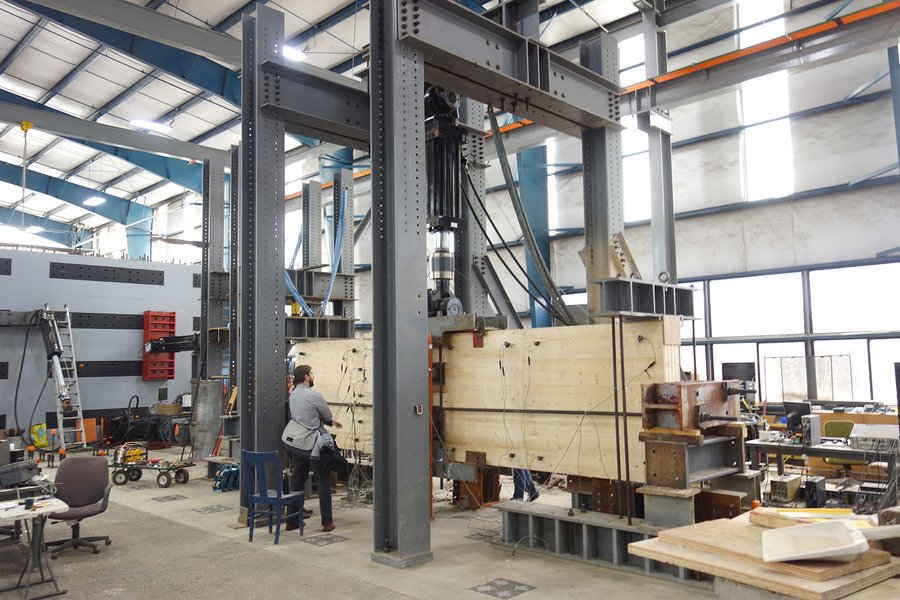
9-Ply CLT wall panel tests to verify flexural and shear stiffness tests performed at Oregon State University
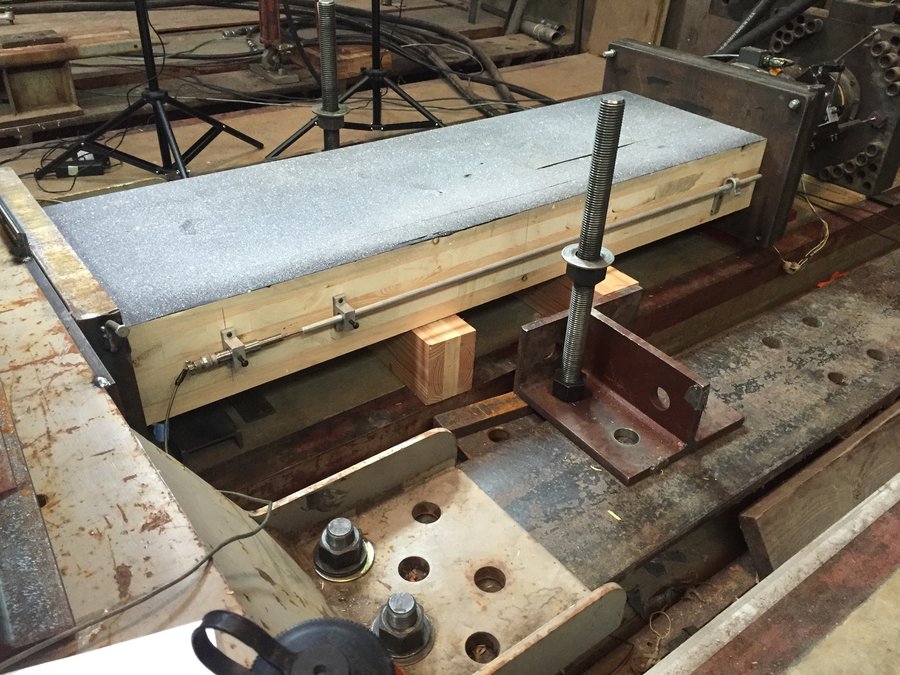
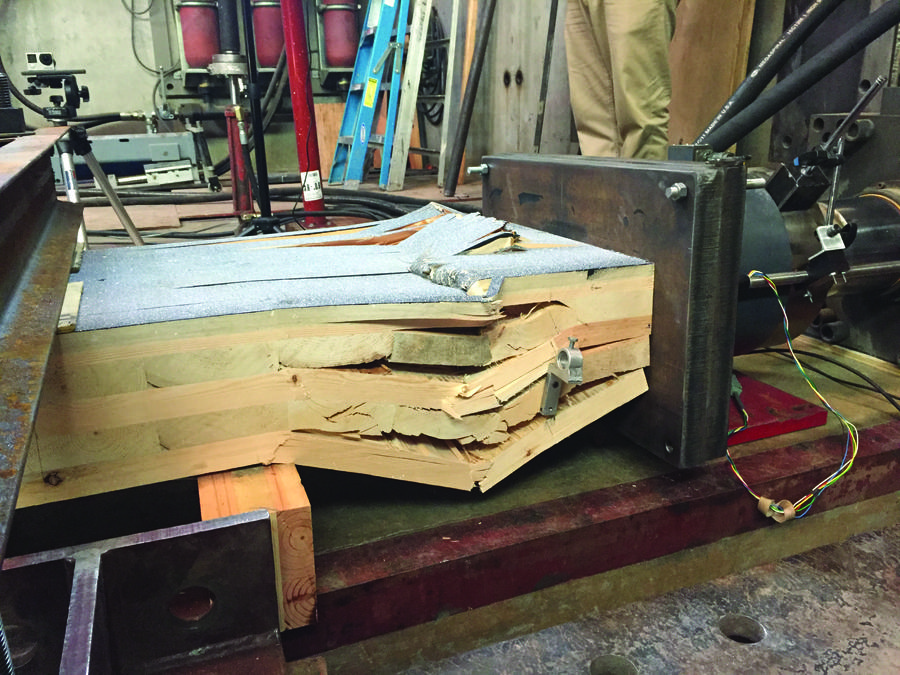
Floor panel crushing test
CLT wall panel structural testing at Oregon State University. Structural tests were taken well beyond actual building demands to observe failure mechanisms in the CLT panels.
Related
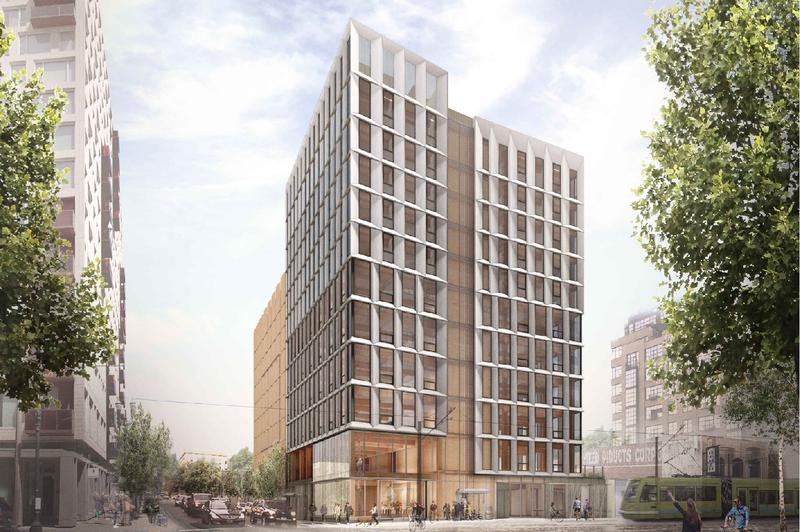


The Framework Building. Our team won a USDA and Softwood Lumber Board competition to develop this groundbreaking project, requiring extensive research and testing. Data from Framework is open-source - read more here.
From left to right: Framework's 9-ply CLT rocking wall lateral system; glue-laminated timber column and beam gravity system; and mass timber superstructure with 5-ply CLT floor decks.
CLT walls, each comprised of thirteen 9-ply CLT panels measuring 10 ft x 20 ft, with deformation-controlled repairable / replaceable steel components.
CLT wall and bounding beam assembly: (a) 10 ft. x 20 ft. 9-ply CLT rocking wall segment with associated (b) bounding columns, (c) collar beam, (d) UFP connectors, (e) splice key, and (f) epoxy rod reinforcement. Wall segments were engineered for offsite prefabrication and shipment to the jobsite for sequential assembly.
A successful ASTM-W119 2-hour wall, column, and UFP fire test
9-Ply CLT wall panel tests to verify flexural and shear stiffness tests performed at Oregon State University
Floor panel crushing test