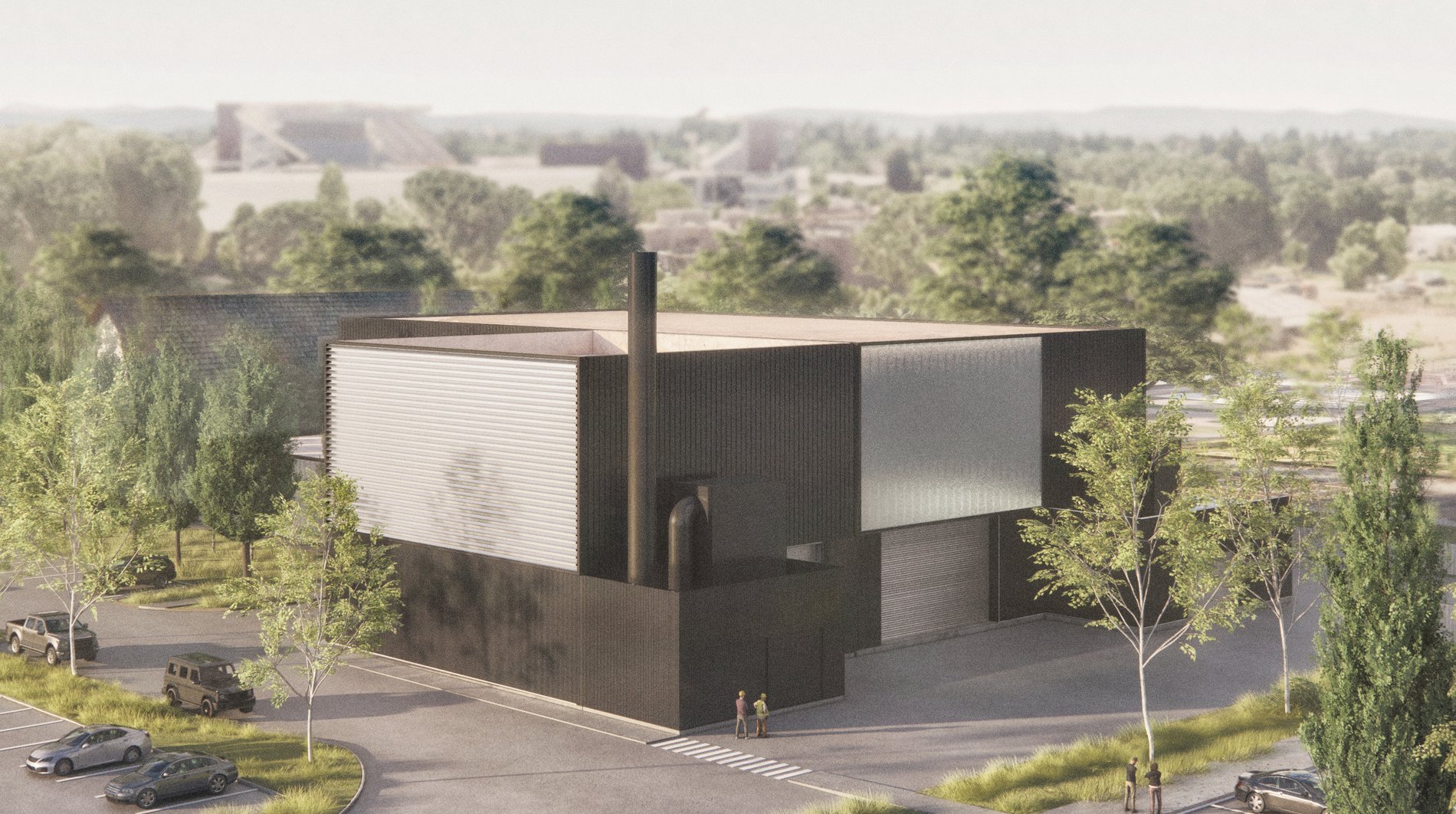
Oregon Fire Testing Facility, developed for Oregon State University in Corvallis Oregon, is connected to the A.A. Emmerson Advanced Wood Products Laboratory,
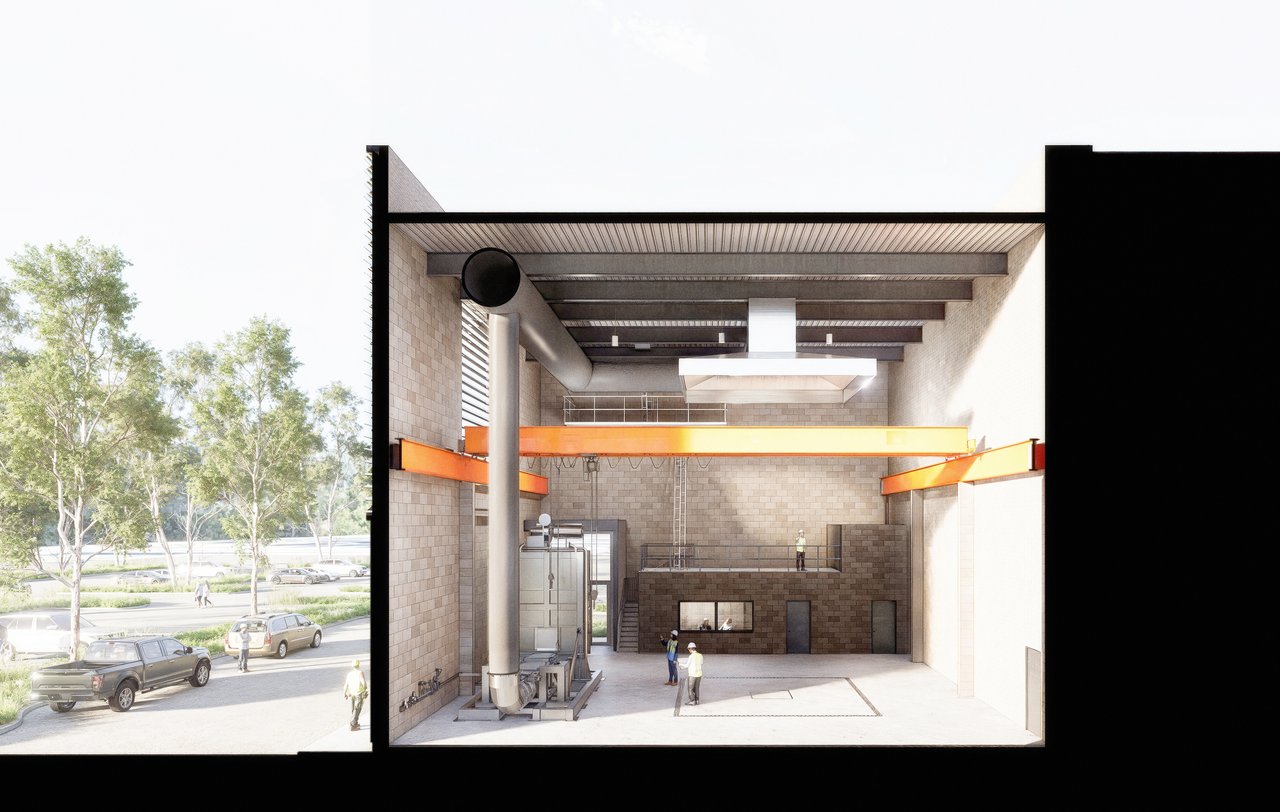
The facility aims to revolutionize fire safety research by providing state-of-the-art testing apparatuses for researchers across the United States, and will not only enable hands-on experimental testing but also generate critical data for use in advanced numerical simulations.
The design integrates seamlessly with the existing lab structure, both in terms of the material and massing but also the layout of the plan. The primary materials are concrete block and steel joists. Careful attention was paid to clearances between the furnace and wall assemblies as well and the dimensions of the open burn area.
Fire testing capabilities in academic settings are limited in the U.S., and no existing university-based facilities can test combustible building materials such as timber. This facility will address this gap through research on both combustible (e.g., mass timber) and non-combustible (e.g., concrete, steel) building materials, as well as wildfire behaviors. With its unique capabilities, this facility will play a crucial role in advancing fire safety knowledge for future construction projects, ultimately making buildings safer and more resilient.
Understanding how structures behave during fire exposure, including key heat transfer and structural mechanisms, is essential for improving fire resistance in modern construction. Experimental data collected from the facility will serve as validation for numerical simulations, enhancing the accuracy of fire behavior predictions. As data is gathered across a wide array of scenarios, researchers can better quantify uncertainty and variability, further improving simulation models.